Newsroom
Dynamic Asset Allocation on the rise as pension plans face an era of controlled disorder
December 8, 2025
- Increased market volatility and geopolitical uncertainty have pushed Dynamic Asset Allocation (DAA) to the fore as pension plans look to mitigate risk
- The current DAA approach includes multi-asset funds that blend active and passive solutions
- External asset managers' roles as key advisors and long-term strategic partners is reinforced in this evolving landscape, enabling them to better guide pension clients
Since 2022, investors have been confronted with unprecedented geopolitical events and market volatility. The mispricing of assets is widespread and has brought Dynamic Asset Allocation (DAA), a strategy that involves regularly adjusting a portfolio’s asset mix, to the fore. According to a new report by CREATE-Research and Europe’s largest asset manager, Amundi, DAA is gaining ground vs Strategic Asset Allocation (SAA), which relies on fixed weights for different asset classes over longer time horizons.
The survey is based on responses from 158 pension plans globally, managing €2.9 trillion of assets. It sheds light on the driving forces behind their increased use of DAA, the approaches likely to be implemented and the new selection criteria when choosing external asset managers.
Monica Defend, Head of the Amundi Investment Institute, said: “This year’s survey revealed pension investors have entered a new regime of controlled disorder. Portfolios are potentially exposed to opportunities as well as threats, at a time when productivity-enhancing innovations are also creating winners and losers.”
Changing and multiple regime shifts will drive adoption of DAA
DAA is viewed by respondents as a pragmatic response to changing macro financial regimes and new market conditions. Key market drivers favouring DAA include disruption from the latest US policies (83%), fears that rising trade tensions will revive inflation (62%) and worries that rising public debt will push up interest rates and harm growth (56%).
Going forward, 84% of respondents predict that the market outlook will elevate the role of DAA, and 75% expect to implement it over the next three years.
However, it will not become an either-or choice between DAA and SAA, and the two approaches mostly complement each other – for now. According to one survey interviewee, “the role of DAA is to provide a portfolio ballast in high volatility regimes and not supersede SAA.”
Risk minimisation over return maximisation
73% of respondents now use DAA to varying extents to achieve their investment goals. Over half (63%) reported it had met their expectations and 37% reported that it hadn’t.
Expectations are centred more on downside protection than on upside performance with risk minimisation cited as the primary goal by 58%. This is echoed by one interviewee: “as market prices are unmoored from fair value, our priority is downside protection followed by upside returns”.
As for the upside, the main goals targeted are enhanced risk-adjusted returns (39%), maximising upside performance (34%) and profiting from temporary mispricing in markets (30%). Adjustments in asset allocation are crucial in helping mitigate inflation risks.
Developed market assets trump emerging market assets for DAA
Respondents plan to implement DAA through a variety of styles. Within the core portfolio, the most popular styles are risk factor investing (58%) and passive funds (53%). For satellite assets, the use of derivative overlays will be key for over half (57%). Pension plans cite two main reasons for their use of overlays: reducing cost and looking to gain opportunistic exposures.
When it comes to specific asset classes, actively managed developed market (DM) equities are seen as the most amendable to DAA by 52% of respondents, followed by passive DM equities (42%), active emerging market (EM) bonds (39%), and active EM equities (37%).
Within DM, under-the-radar European and Japanese assets are likely to be favoured due to under-pricing, greater liquidity and lower volatility. EM assets are proving less popular, with questions around potential value traps in their most recent rally.
As candidates for DAA, interest outside of traditional asset classes of equities and bonds is muted, with only 24% of respondents favouring private market secondaries. This is no surprise, given investing in private markets is a long-term buy-and-hold game, not readily amenable to DAA.
Amin Rajan, Project Leader at CREATE-Research, said: “Strategic asset allocation is increasingly exposed to the rollercoasters that whipsaw pension plans. It is no surprise that asset classes that pose higher risk or require longer holding periods have been seen as less favourable.”
More stringent selection criteria for external asset managers
Survey respondents are becoming more demanding of their external asset managers as they venture into DAA. Dynamic investing adds an extra layer of active risk to portfolios at a time when many active managers are struggling to outperform benchmarks.
Asset managers are moving away from being distant vendors to strategic partners of their pension clients. This requires stricter selection criteria split across three clusters. The first is client centricity. A good understanding of pension clients’ liability profile and risk tolerances tops the list for 58% of respondents. The second cluster involves business conduct and how asset managers operate in the client’s interest. Here, a talent pool well-versed in dynamic investing is key (55%). The final cluster revolves around investment expertise. Access to models and technology that give an information edge is vital (54%), followed by close collaboration of teams across asset classes to create dynamic strategies (52%).
Vincent Mortier, Group Chief Investment Officer of Amundi, said: “Asset managers must embrace the critical role they play. They cannot be complacent, seeing themselves as distant vendors or relying on past mandate success. At Amundi, we have the proven track record needed to implement DAA and SAA strategies in tandem on behalf of our pension clients.”
Experts
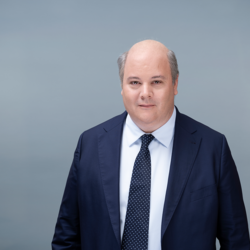
Vincent has been Group Chief Investment Officer since February 2022. Previous to that, he was the Group Deputy CIO of Amundi since 2015. He is a member of the Globa[...]
Read more
Monica Defend, Head of Amundi Investment Institute. Monica is Head of the Amundi Investment Institute, which was created in February 2022, and a member of Amundi's Exe[...]
Read moreContact

Danae Quek
UK - International Press Relations

About Amundi
About Amundi
Amundi, the leading European asset manager, ranking among the top 10 global players[1], offers its 100 million clients - retail, institutional and corporate - a complete range of savings and investment solutions in active and passive management, in traditional or real assets. This offering is enhanced with IT tools and services to cover the entire savings value chain. A subsidiary of the Crédit Agricole group and listed on the stock exchange, Amundi currently manages more than €2.3 trillion of assets[2].
With its six international investment hubs[3], financial and extra-financial research capabilities and long-standing commitment to responsible investment, Amundi is a key player in the asset management landscape.
Amundi clients benefit from the expertise and advice of 5,600 employees in 35 countries.
Amundi, a trusted partner, working every day in the interest of its clients and society
Footnotes
- ^ [1] Source: IPE "Top 500 Asset Managers" published in June 2024 based on assets under management as of 31/12/2023
- ^ [2] Amundi data as at 31/03/2025
- ^ [3] Paris, London, Dublin, Milan, Tokyo and San Antonio (via our strategic partnership with Victory Capital)
Footnotes